Reviews in Religion & Theology
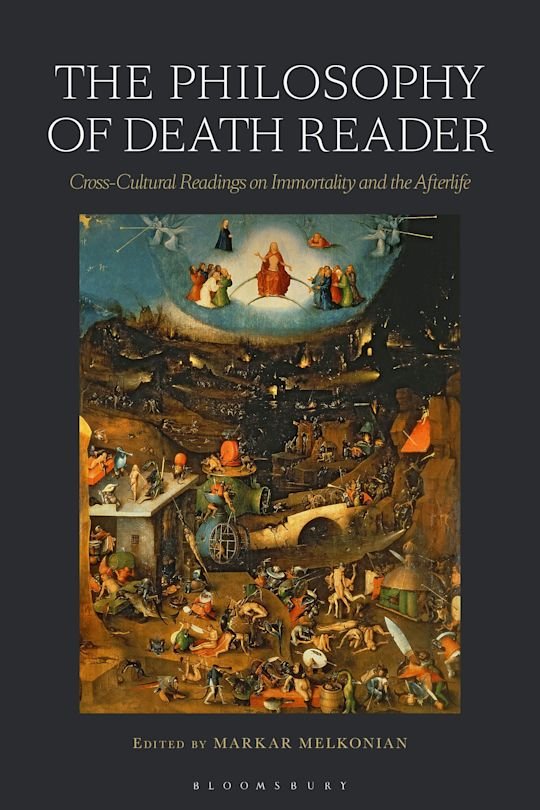
The Philosophy of Death Reader: Cross-Cultural Readings on Immortality and the Afterlife
Markar Melkonian (ed.), Bloomsbury, 2019 (ISBN 978-1-350-06933-6), xiv + 434 pp.
First published: 23 January 2020
There has been an uptick in important works exploring the afterlife and the nature of death from theological, philosophical, and social perspectives. As of late, a growing interest in death and the afterlife has been a particular interest amongst analytic philosophers of religion and theologians. Several works come to mind, including The Palgrave Handbook of the Afterlife, Heaven and Philosophy, The Oxford Handbook to Eschatology, and The Oxford Handbook to Death to mention just three important analytic works. Further, there has been significant interest from analytic philosopher Jerry L. Wall’s trilogy on Hell, Heaven, and Purgatory. This is just a sampling of well-regarded works in analytic philosophy of religion on the afterlife. The Philosophy of Death Reader contributes to this important growing literature.
The Reader contributes in at least three ways to the analytic philosophy of death and afterlife literature. First, by design, Melkonian has given some preference to analytic readings of death and the afterlife. That said, the Reader is situated in other historical readings. This is the second contribution. To be clear, the collection of readings is not merely contemporary in nature but provides the interested inquirer with a selection of some of the most historical readings that aid the philosopher so as to enter int the dialectic throughout history. Third, the Reader attempts to offer a unique approach amongst other collections in that the editor aims at a breadth of cultural readings on the subject. Additionally, there are other highlights worth noting. At the end of each section, the editor offers guided discussion questions useful for verbal discussions or essay writing, along with a ‘further reading’ list so that the student of the afterlife can explore the topic in more depth. For these reasons, the Reader will be a usefulcollection in an undergraduate or graduate seminar on death and the afterlife.
As a useful resource for students, the Reader serves the student well in touching on the major positions within the history of afterlife reflection. Structured accordingly, the Reader gives a survey of readings on the immortalist tradition in the first section. The second section acquaint the student with positions on rebirth or reincarnation – positions on death that are common to Eastern religions. The third section touches on issues relevant primarily to Christian theists focusing on physical resurrection. The fourth section gives essays on the challenges with immortality, which opens the door to the mortalist tradition. The fifth section gives a sampling of readings from the mortalist tradition. In this way, the Reader will not simply appeal to Christian theists, as so many recent collections do, but to anyone interested in death.
The Philosophy of Death Reader is an important contribution as a textbook for seminars on death and the afterlife. That said, the Reader will likely appeal primarily to analytic philosophers of religion and analytic theologians rather than to a wider readership of those interested in theology or sociocultural understandings.
Paluch Professor, Mundelein Seminary, IL
Accessed 15 Aug. 2021
The Philosophy of Death Reader
Cross-Cultural Readings on Immortality and the Afterlife
Publication Information
Publisher: Bloomsbury Academic
Publication Date: 2019
Length: 431 pages
Paperback ISBN: 978-1-3500-6933-6
About The Book
The Philosophy of Death Reader brings together pivotal readings from across centuries and across cultures on one of humanity's oldest questions: What, if anything, survives death?
Drawing from a wide range of philosophical, religious, and cultural traditions, this collection explores competing views concerning mortality, immortality, personal identity, the soul, and the possibility of an afterlife. Carefully selected readings are organized around central themes and accompanied by editorial introductions that provide historical context and guidance for readers.
Designed for students, educators, and general readers alike, the volume offers an accessible entry point into the philosophy of death while presenting many of the most influential ideas and debates that have shaped human thinking across civilizations.
Themes Explored
• Death and mortality
• Immortality and the afterlife
• Personal identity
• The soul and human consciousness
• Religious and philosophical traditions
• Meaning, purpose, and human existence
• Cross-cultural perspectives on death
• Classical and contemporary debates
Reviews & Endorsements
"A timely and wide-ranging collection that covers the classic discussions through to the contemporary on a theme that we might well like to ignore, but cannot: the facts of our own mortality. A must-read for every student of death."
— Beverly Clack, Professor in the Philosophy of Religion, Oxford Brookes University, UK
"This new multicultural collection covers all the major themes in the philosophy of death from classical antiquity to the contemporary period. The readings are wisely chosen and the volume is intelligently laid out with clear and helpful contextual introductions to each section and selection. Highly recommended for individual readers and classroom assignment."
— Levon Chorbajian, Professor of Sociology, University of Massachusetts, USA
"An excellent collection of primary source material on key topics in the philosophy of death. The selections are thoughtfully organized and given accessible introductions and annotations by the editor. This book is very well-suited for undergraduate courses in the philosophy of death, as it skillfully presents thought-provoking debates carried on across the centuries and invites students to join."
— Mark Berkson, Professor of Religion, Hamline University, USA