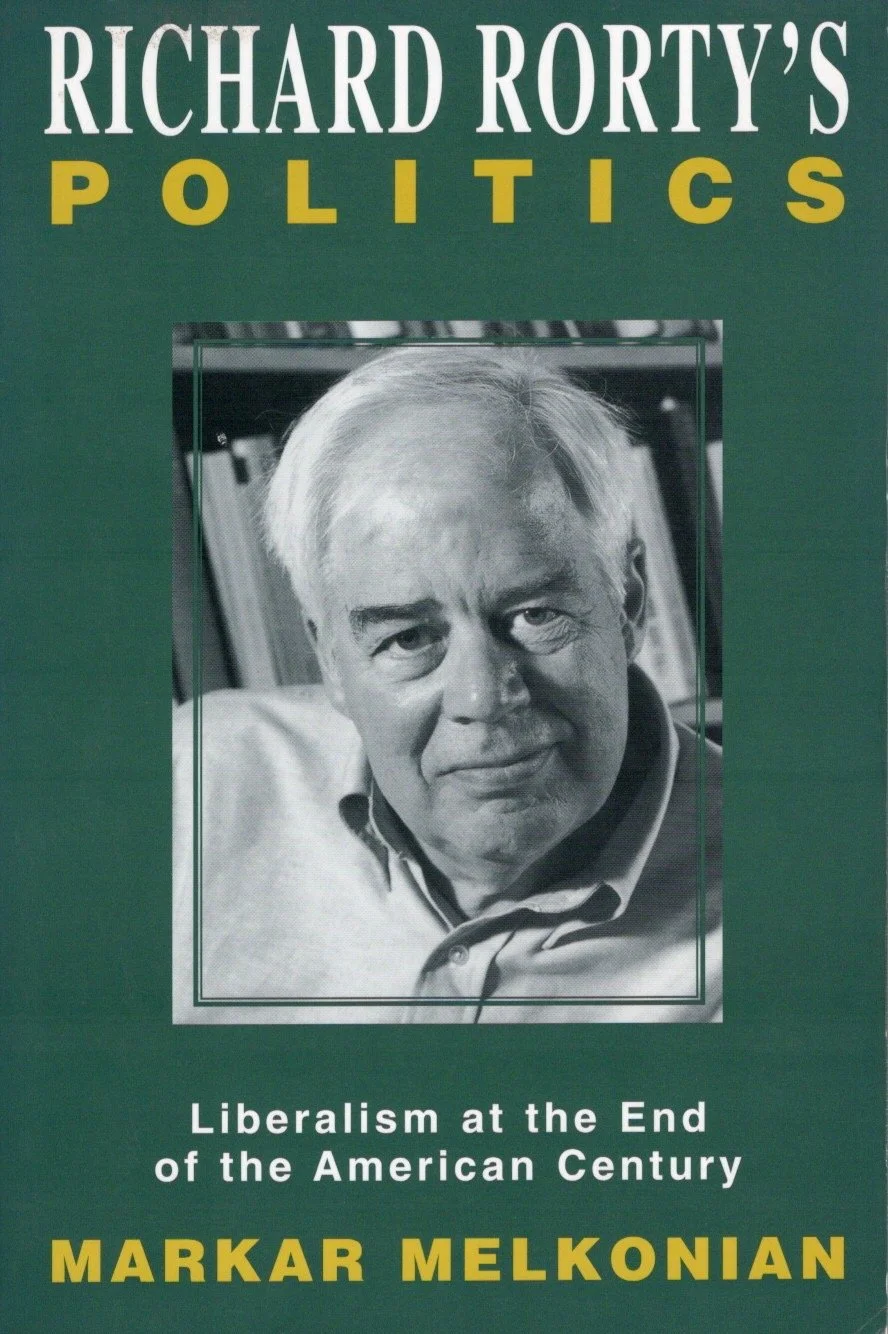
Richard Rorty's Politics
Liberalism at the End of the American Century
Author: Markar Melkonian
Publication Information
Publisher: Humanity Books / Prometheus
Publication Date: December 1999
Length: 226 pages
Hardcover ISBN: 1-57392-724-4
Paperback ISBN: 1-57392-725-2
About The Book
Richard Rorty's Politics: Liberalism at the End of the American Century examines the political thought of Richard Rorty, one of the most influential American philosophers of the late twentieth century. The book explores Rorty's contributions to debates concerning liberalism, democracy, pragmatism, and social reform, while critically evaluating the philosophical assumptions that underlie his political project.
Written during a period of intense discussion about the future of liberal democracy following the end of the Cold War, the study situates Rorty's work within broader debates about political responsibility, social justice, and the role of intellectuals in public life. Melkonian examines both the strengths and limitations of Rorty's approach, offering readers a detailed analysis of one of the most widely discussed political thinkers of his generation.
Rather than treating political philosophy as an abstract academic exercise, the book considers the practical implications of philosophical ideas and the ways in which they influence contemporary political discourse.
Themes Explored
Liberalism and democratic theory
Pragmatism and political philosophy
Social justice and reform
Intellectuals and public life
The legacy of twentieth-century political thought
Philosophy and contemporary politics
Review Blurbs
"Melkonian's wit and urbane and trenchant style are the equal of his subject's, Richard Rorty's, and his philosophical and political groundedness and subtlety give us a clear, critical analysis of Rorty's post-modern form of pragmatism. The result is a book as readable as it is edifying and important."
— John Brentlinger, author of The Best of What We Are: Reflections on the Nicaraguan Revolution
"No discussion of liberalism and its future will be complete without a serious study of Melkonian's book."
— Thomas Riggins, New York University, New School for Social Research